.jpg)
First Aid Training for Special Situations: Building More Inclusive and Equitable Lifesaving Education
When we teach first aid and CPR, we often focus on the skills themselves: How deep should compressions be? Where should hands be placed? How do we respond to a choking emergency?
But there is another important question we should be asking: Does our training prepare us to respond to everyone?
As aquatic professionals, we serve people with different bodies, abilities, skin tones, medical conditions, ages, and lived experiences. Our emergency training should reflect that diversity. If the only person represented in our training materials is a healthy, able-bodied person with one standardized body type and skin tone, we may unintentionally create gaps in preparedness.
Diversity, equity, inclusion, and justice (DEIJ) in first-aid education is not simply about representation for representation’s sake. It is about building competent rescuers who are prepared to recognize and respond to emergencies involving the diverse communities we serve.
Four Areas Where You Can Make First-Aid Training More Inclusive
1. Breast/Chest-Form CPR Manikins: Training for Real Bodies
For years, CPR education has primarily relied on standardized, relatively flat-chested manikins. While these are effective for teaching the fundamentals of CPR, they don’t necessarily reflect the variety of bodies rescuers may encounter.
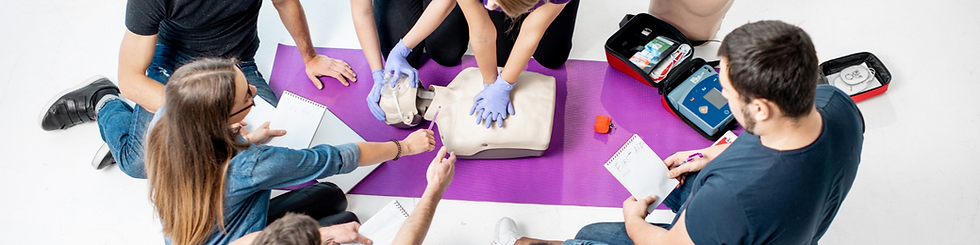
Breast/chest-form CPR manikins provide an opportunity to introduce greater realism into CPR education. They allow learners to practice locating the appropriate hand-placement area and performing compressions on a body that more accurately represents some of the people they may encounter during an emergency.
This can also address an often-overlooked barrier: hesitation.
A rescuer shouldn’t have to encounter a body type for the first time during an actual emergency. Training should allow learners to practice navigating these situations in a professional, respectful, and clinically appropriate way.
Using a variety of manikins reinforces an important message: CPR is for everyone, and rescuers should be prepared to provide care to everyone.
For Your Toolkit: Chest-Formed Manikin and Manikin ChestAccessory
2. Diverse Skin-Tone Manikins: Seeing What We Are Taught to Look For
Representation in first-aid education also extends to skin tone.
Many traditional training manikins have lighter skin tones. While this may seem like a small detail, it can influence how learners are taught to recognize signs of illness and injury.
Some medical signs can present differently depending on a person’s skin tone. For example, changes associated with oxygen deprivation, shock, or circulation problems may not appear as the classic “blue” or “pale” appearance that is commonly emphasized in training.
Providing manikins with a range of skin tones can help instructors create opportunities to discuss these differences and encourage rescuers to assess the whole person, rather than relying on a single visual cue.
This is particularly important in aquatic environments, where lifeguards and other staff may be the first people to recognize that something is wrong.
Inclusive training should help rescuers develop multiple assessment skills—looking at breathing, responsiveness, circulation, behavior, and other signs—rather than depending on one expected visual presentation.
What we practice seeing in training influences what we recognize in an emergency.
For Your Toolkit: Adult CPR Manikin, Tan and Brown Skin
3. Stoma and Tracheostomy CPR: Preparing for Situations Outside the Standard Scenario
Most CPR classes teach a fairly straightforward scenario: an unresponsive person who is not breathing normally and requires chest compressions and rescue breaths.
But real emergencies don’t always follow the training scenario.
People with tracheostomies or other airway modifications may require different considerations during an emergency. Including stoma and tracheostomy scenarios in first-aid education can help rescuers become more comfortable when the person’s airway anatomy differs from what they have traditionally been taught.
The goal isn’t for every lifeguard to become an expert in every medical condition. Instead, the goal is to reduce uncertainty and hesitation when faced with something unfamiliar.
Aquatic professionals should know where to find their organization’s emergency action plans, understand when to activate EMS, and follow the appropriate guidance from their certifying organization and medical protocols.
Adding these scenarios to training also sends a powerful message to participants: people with medical devices and disabilities belong in our facilities, and our emergency planning should account for them.
4. Disability, Body Diversity, and Accessibility in First-Aid Scenarios
Inclusive first-aid education should go beyond the manikin itself.
Consider the scenarios we use during training. Are we practicing with people who have mobility disabilities? Someone who uses a wheelchair? An older adult? Someone with a smaller or larger body? Someone pregnant? Someone who uses a prosthetic limb or other adaptive equipment?
For example, rescuers may need to think about how to safely assist someone who uses a mobility device, how to communicate with someone who has a hearing or vision disability, or how an individual’s body size or mobility may affect an emergency response.
These scenarios encourage rescuers to think critically rather than simply memorize a sequence of steps.
Effective training prepares rescuers to assess the situation, adapt when appropriate, communicate effectively, and use the resources available to them while following established protocols.
Moving From Representation to Preparedness
DEIJ in first-aid training shouldn’t be treated as an additional topic that gets squeezed into the last five minutes of a class.
It can be incorporated into the way we select equipment, develop scenarios, teach skills, and evaluate competency.
As aquatic professionals, we have an opportunity to ask ourselves:
Do our training manikins represent the communities we serve?
Are we teaching learners how medical signs can present across different skin tones?
Do our scenarios include people with disabilities and different body types?
Are we preparing staff for medical situations that may fall outside the traditional CPR scenario?
Are our emergency action plans and training practices accessible to all of our staff?
The goal isn’t to make emergency training more complicated. The goal is to make it more realistic.
Everyone Deserves a Rescuer Who Is Prepared
In aquatics, we often say that our job is to be prepared for the emergency we hope never happens.
That preparation should include preparing for the person, not just the procedure.
Every guest deserves to enter an aquatic facility knowing that the staff responsible for their safety have been trained to recognize and respond to a wide range of people and circumstances.
Inclusive first-aid education is one small but meaningful step toward that goal.
When we make our training more representative, we make our responders more prepared. And when our responders are more prepared, we create safer and more equitable aquatic environments for everyone.
About the Author
Deanna Main (she/her) is the Senior Coordinator of Aquatics at the University of Colorado Boulder and serves on the AOAP Diversity and Inclusion Committee and Membership Engagement Committee. Throughout her aquatics career, she has gained experience in a variety of unique environments, including lifeguarding at Casa Bonita during diver practices, supporting water safety operations at Sloan's Lake during the Dragon Boat Festival, and volunteering at Special Olympics Polar Plunge events and Ironman races. You can connect with Deanna at Deanna.Main@colorado.edu.
Are you interested in submitting a blog post? Reach out to Kirsten at kirsten@aquaticpros.org to share your idea and learn more about the AOAP Blog.

Comments